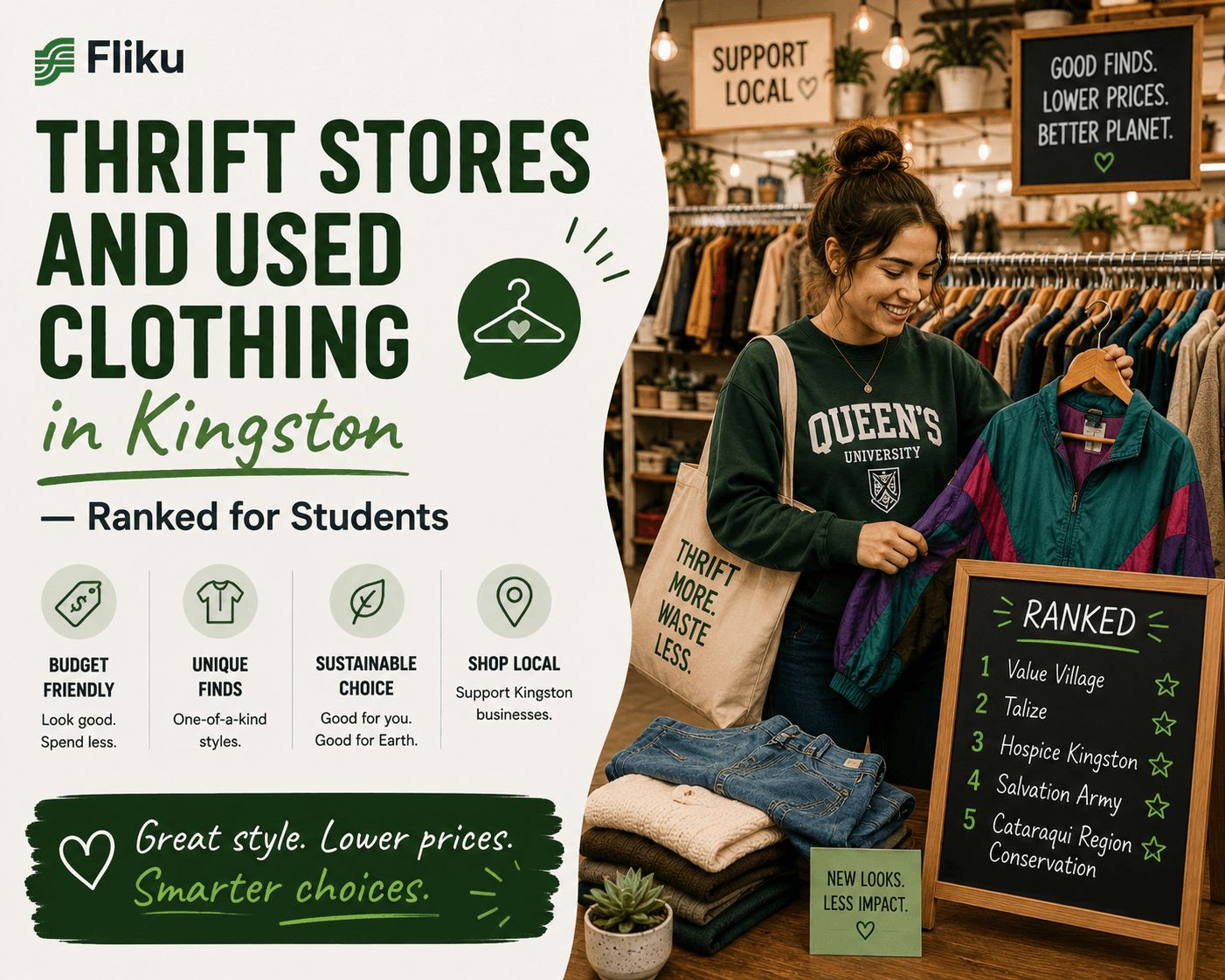
Quick Answer
Value Village, Salvation Army, and Kingston's independent thrift shops compared. What each is good for and when to go for the best finds.
Kingston has a functional thrift ecosystem that most students underuse, and the reason is usually that they tried one store once, found nothing on that particular day, and concluded secondhand shopping doesn't work here. The thing nobody tells you about thrift shopping: success depends almost entirely on timing your visits, knowing what each store is good for, and understanding that inventory turnover is irregular. A store that has nothing you want on a Tuesday afternoon might have something you've been looking for since September when they process a batch of donations on Thursday morning. Strategy matters.
The other thing nobody tells you: the best thrift score in Kingston every year happens for two weeks in late April and early May when thousands of students are moving out of their apartments and need to get rid of things they can't take with them. Furniture, clothing, kitchen equipment, decorative items, electronics — all of it flows out of student ghetto apartments and into various secondhand channels at once. Students who know when and where to look furnish entire apartments for under $200 during this window. Everyone else pays full price in September.
Value Village Kingston
Location: Princess Street and Bath Road area
Price level: Mid-range for thrift; standardized by category
Best for: Clothing volume, consistent selection across sizes and categories
When to go: Weekday mornings, especially after processing days
What Value Village Actually Is
Value Village (operated by Savers) is a for-profit thrift chain, not a charity. They purchase donations from nonprofit partners and resell at standardized prices. This means pricing is consistent and predictable — a shirt in their system is priced as a shirt regardless of brand, a jacket as a jacket regardless of whether it's H&M or Patagonia. This creates the hunting dynamic that makes thrift shopping interesting: the same $10 tag on a fast-fashion shirt and a quality wool sweater means finding the latter is genuinely valuable.
The Pricing System
Value Village prices by category, not by brand or quality. Current approximate Kingston prices:
- T-shirts: $5-9
- Pants/jeans: $9-15
- Sweaters/sweatshirts: $10-15
- Jackets/coats: $15-30
- Dress shirts/blouses: $8-13
- Dresses: $10-18
These prices are higher than Salvation Army on average but still well below retail. The advantage is selection — Value Village's volume means more to choose from across sizes.
How to Find the Best Things at Value Village
The thing nobody tells you about Value Village: their best finds hit the floor on processing days, before the regular Sunday afternoon crowd picks through them. Ask staff which days they process new donations — this varies by store and week. Visit the morning after a processing day and you're seeing inventory before it's been browsed. Weekend afternoons are when the store is busiest and most picked over; that's the worst time to shop. Weekday mornings, especially mid-week, offer better inventory relative to competition.
The most undervalued section at most Value Villages: the men's section, even if you shop women's. Oversized flannels, vintage workwear, and quality knitwear are often better represented there and overlooked by shoppers who only check the women's side. A $12 men's wool sweater is the same item as a $60 women's version at a fast-fashion retailer.
Salvation Army Thrift Store Kingston
Price level: Generally lower than Value Village
Best for: Lowest-cost clothing, household items, kitchen supplies, furniture (when available)
When to go: Early in the week after a weekend of new donations
What the Salvation Army Is Actually Better For
The Salvation Army's pricing is less standardized than Value Village, which means more variation — you find things priced surprisingly low because whoever priced the item on that day's shift was being conservative. You also occasionally find things priced surprisingly high for a thrift store. But the ceiling on prices is lower overall.
For students furnishing an apartment, the Salvation Army is particularly strong for household items. Dishes, glasses, pots and pans, small appliances (mixers, toasters, coffee makers), and decorative items turn over frequently and are priced modestly. A complete kitchen starter kit — pots, pans, utensils, plates, glasses — can often be assembled for $40-60 here versus $200+ buying new at Walmart.
Furniture availability is less consistent (large items come and go) but when it's there, the prices are often the lowest available anywhere in Kingston for functional secondhand furniture. Check the store's Facebook page if they have one — some Salvation Army locations post furniture finds on social media as items come in.
Buy Nothing Kingston (Facebook Group)
Cost: Free — everything in the group is given away
How it works: Facebook group where Kingston residents post items they're giving away; community members claim them
Best for: Furniture, household items, occasional clothing and electronics
Limitations: Availability is unpredictable; can't plan around specific needs
How to Use Buy Nothing Kingston Effectively
The thing nobody tells you about Buy Nothing groups: they reward regular participation. Members who engage with posts (even just "liked!" or "this is so generous") and who themselves offer items when they have things to give tend to get more responses when they post needs. The group runs on community goodwill, not just transactions.
For students: post what you need (furniture, kitchen items, specific clothing categories) in a "looking for" post. Other group members who have those things but haven't thought to post them often respond to requests. This is more effective than waiting and hoping the item you need shows up organically.
The peak Buy Nothing period in Kingston: late April through mid-May. The student move-out creates a donation surge unlike anything else in the Kingston secondhand calendar. Track the group actively during this window; significant items appear and disappear within hours.
Kijiji Kingston Free Section and Facebook Marketplace Free Listings
Both platforms have "free" categories where people list items they want gone quickly. Kijiji's free section in Kingston is particularly active during student move-out season and includes everything from furniture to textbooks to household equipment. The rules: first come, first served; you arrange pickup; no cost. Check it daily during late April and May for the best finds.
The Curb Alert — Kingston's Annual Free Furniture Season
For one to three weeks in late April and the first half of May, Kingston streets in the student ghetto produce a remarkable volume of free items left at the curb by students moving out. Furniture, kitchen equipment, decorative items, small appliances, clothing, and occasionally electronics appear at curb lines and are taken within hours by other students, residents, and scavengers.
The rules of curb alert shopping in Kingston:
- If it's at the curb, it's available to take — this is the convention in Kingston student neighborhoods during move-out
- If you're not sure, ask the person moving — they're almost always happy to confirm
- Inspect for damage before taking — some curb items are there because they're broken
- Check online (Google the model number of any appliance) before taking electronics
- The best items go within an hour of being set out; earlier in the morning means better selection
The Buy Nothing Kingston group posts these curb alerts real-time during move-out season. Following the group in May and turning on notifications gives you an immediate alert when significant items are spotted.
Tips for Thrift Shopping Success in Kingston
The difference between productive thrift shopping and a frustrating experience:
- Know your sizes before you go: Secondhand sizing is inconsistent — labels lie, vintage sizing runs differently from modern, and items have been washed and may have shrunk or stretched. Know your measurements and check items against those, not just the size label.
- Inspect before buying: Check seams, zippers, buttons, fabric condition, and staining. Thrift stores don't do quality control. A shirt you can't wear isn't worth $8.
- Wash everything before wearing: Standard practice; nothing more to say.
- Visit on weekday mornings: Less competition, fresher inventory, less picked-over selection.
- Check the seasonal rotation: Thrift stores sometimes keep seasonal items in back storage; fall arrivals of winter coats often hit the floor in September-October. Ask if there's additional seasonal stock not yet on the floor.
- Build a list of what you're looking for: Thrift shopping with a specific list is more productive than browsing. You're looking for a winter coat in your size — you can assess items against that specific need rather than evaluating everything.
What thrift stores are in Kingston Ontario near Queen's University?
Value Village (Princess Street area) is the largest with the most consistent selection. Salvation Army thrift stores in Kingston have lower prices on average and are particularly strong for household items. The Buy Nothing Kingston Facebook group is the free alternative for furniture, household items, and clothing from local residents. Late April to mid-May is the peak season for all secondhand channels in Kingston due to student move-out.
When is the best time to find cheap furniture in Kingston?
Late April through mid-May — student move-out season. Thousands of students leaving Kingston apartments need to offload furniture they can't take with them, producing the largest concentration of low-price and free furniture available in the city. Facebook Marketplace, Fliku, the Buy Nothing Kingston group, and curbside finds all peak during this window. Students arriving in September who didn't furnish during the spring move-out season pay significantly more for the same furniture.
Is Value Village in Kingston worth it for students?
Yes, for clothing specifically. Their standardized pricing means brand-name and quality items cost the same as fast-fashion items with the same tag. Regular visits during weekday mornings, especially after processing days, turn up worthwhile finds. For household items and furniture, the Salvation Army or free channels (Buy Nothing, Facebook free section, curb finds during move-out) are often better value. Value Village's volume of clothing selection is the main reason to visit.