Quick Answer
A realistic $50/week grocery strategy for Kingston students. What to buy, what to cook, and how to eat more than instant noodles without spending $200/month on food delivery.
Second week of October. You check your bank account before ordering Skip the Dishes for the third time this week and feel that specific combination of hungry, tired, and vaguely guilty that characterizes the Kingston student food experience for a significant portion of the student population. The Skip order is $23 with fees. You ordered similar things on Monday ($19) and Wednesday ($21). That's $63 in three food delivery transactions, and you've eaten fine but not notably well, and you have no idea what you'll eat tomorrow. This is the expensive version of not cooking — not because the individual decisions are obviously bad, but because they compound invisibly.
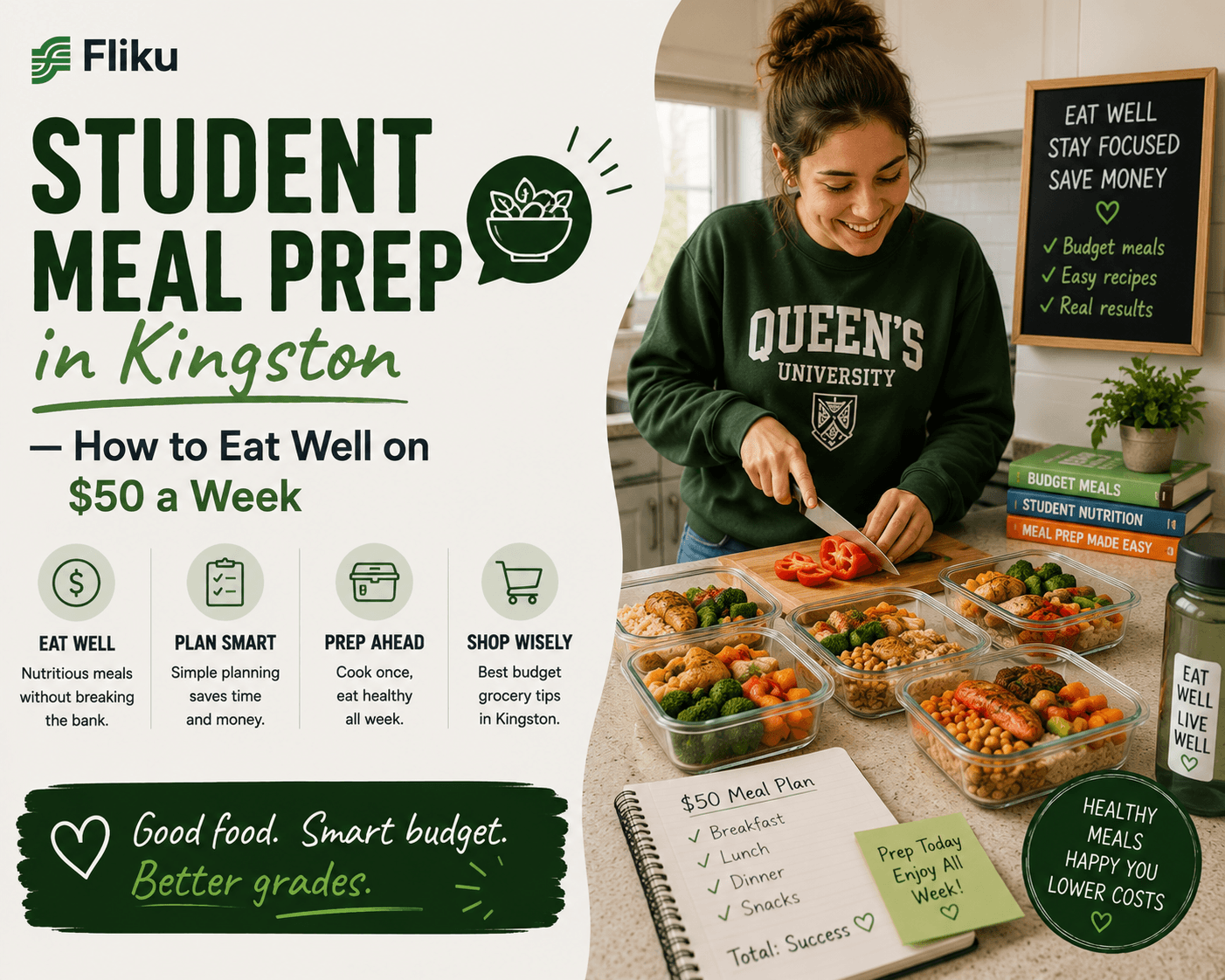
$50 a week — $200 a month — is achievable for groceries in Kingston if you buy the right things and spend two hours on one batch cooking session per week. The math isn't theoretical. Students who do this eat real meals, eat nutritiously, and spend less than a third of what delivery-dependent students spend. The thing nobody tells you: the barrier isn't cooking skill. It's the initial setup of knowing what to buy and having a simple enough system that you'll actually do it when you're tired.
The Core Principle: Batch Cooking, Not Deprivation
Cheap eating and good eating aren't opposites — they're aligned when you cook in batches. A pot of black bean soup costs $3.50 in ingredients (beans, canned tomato, onion, garlic, spices) and produces five meals. That's $0.70 per meal. The same $3.50 doesn't buy you anything recognizable at a restaurant. A whole roasted chicken ($12 at No Frills) produces enough meat for four meals, plus the carcass for stock if you want it. Four meals at $3 each. The per-meal economics of batch cooking are 5-10x better than buying individual meals, and the food is as good or better.
The system: on Sunday afternoon or evening, spend 90-120 minutes cooking three or four base components. For the rest of the week, you assemble meals from those components in five minutes. No skill required beyond basic cooking. No recipe necessary after the first few times you do it. No daily decision fatigue about what to eat.
The $50 Weekly Shopping List at No Frills Kingston
This is a real $50 week. Prices approximate based on No Frills Kingston pricing; exact totals vary with flyer specials, which you should use.
| Item | Quantity | Cost (Approx) | Meals Produced |
|---|---|---|---|
| Chicken thighs (bone-in) | 2 kg | $9-12 | 6-8 servings protein |
| Eggs | 18-pack | $5-7 | 6-9 meal uses |
| Dry lentils or chickpeas | 1 kg bag | $3-4 | 8-10 servings |
| Rice (long grain) | 2 kg bag | $3-5 | 10-12 servings base |
| Frozen vegetables (broccoli/mixed) | 1 kg bag | $4-5 | 8-10 servings |
| Seasonal fresh vegetables (2-3 types) | Weekly variety | $6-8 | Several uses |
| Oats (large format) | 1 kg | $3-4 | 10-12 breakfasts |
| Bread or wraps | 1 loaf / pack | $3-4 | 1 week lunches |
| Canned tomatoes or beans | 3-4 cans | $4-5 | 2-3 meal bases |
| Olive or canola oil | Shared cost ~$1/week | $1 | All cooking |
| Garlic, onion, basic spices | Shared cost ~$1-2/week | $2 | Seasoning all meals |
Total: $43-57 — within range depending on what's on the flyer that week and what staples you already have from previous weeks (spices, oil, and grains last multiple weeks, so those costs spread out).
This list produces: 7 breakfasts, 7 lunches (roughly), and 7 dinners — three meals a day for the week — at an average of $2.50-3.50 per meal.
The Sunday Batch Session — 90 Minutes, One Week of Meals
The system works because you front-load the work on Sunday when you (maybe) have time, and spend the rest of the week doing minimal assembly work. Here's the full Sunday session:
The Protein Component (40 minutes, mostly oven time)
Season 2 kg of chicken thighs simply: salt, pepper, garlic powder, a bit of olive oil. Roast at 425°F for 35-40 minutes. While they're in the oven, you do everything else. Pull them out, let them cool, strip the meat from the bones if you prefer boneless, store in a container. This chicken goes into: rice bowls, wraps, pasta, salads, or eaten on its own. Six to eight servings of protein ready to go.
The Grain Component (20 minutes, mostly stovetop time)
Cook a large batch of rice. 2 cups dry rice makes 4 cups cooked — about six servings. Alternatively, cook a batch of pasta and store it slightly underdressed with oil to prevent sticking. This is the base that everything else goes on or into.
The Legume Component (30 minutes active/passive)
Cook a big pot of lentils. Red lentils cook in 20 minutes without soaking; brown lentils in 30-35 minutes. Season with cumin, coriander, garlic, and salt. This becomes: soup (add stock and blend or leave chunky), a dal-style dish served over rice, an addition to salads, or a wrap filling. Chickpeas take longer (1-2 hours from dry) but can be soaked overnight and cooked while you do other things Sunday. Both keep in the fridge for 5-6 days.
The Vegetable Component (15 minutes)
While the chicken roasts and the grains cook: chop and roast a sheet pan of vegetables (whatever's cheapest this week — sweet potato, broccoli, peppers, zucchini), or quickly sauté fresh vegetables, or prep a large salad base (cabbage, carrots, and hearty greens hold much better than delicate lettuces). This is what makes meals feel like meals instead of just protein and carbs.
Breakfast Prep (10 minutes)
Pre-portion oats into five containers with whatever additions you like (nut butter, frozen berries, honey, cinnamon). In the morning, add boiling water or heat in the microwave. Seven breakfasts in ten minutes of Sunday prep.
What the Rest of the Week Looks Like
With components made on Sunday:
- Monday breakfast: Overnight oats — grab from fridge, done.
- Monday lunch: Rice + chicken + vegetables in a bowl, dressed with soy sauce or hot sauce. 3 minutes.
- Monday dinner: Lentil soup heated up with bread. 5 minutes.
- Tuesday: Chicken wrap + oats + pasta with lentil sauce. Different but using same components.
- Mid-week: Eggs scrambled with whatever vegetables are left, served with rice. A 10-minute meal that feels substantial.
The thing nobody tells you about meal prep: the meals don't have to be the same every day. The components are neutral enough that rearranging them — chicken in a wrap vs. on rice vs. in pasta — feels like variety even though the underlying ingredients are consistent. Add a different sauce or seasoning each time and the monotony concern largely disappears.
The Spice Investment — One Time, Ongoing Return
The largest single barrier to home cooking feeling good is under-seasoned food. Students who cook bland food blame their lack of cooking skill when the actual issue is that they haven't invested in a basic spice set. A $25-30 one-time investment in spices at No Frills or Walmart — cumin, coriander, paprika, chili powder, turmeric, oregano, garlic powder, onion powder, black pepper, cayenne — transforms the flavor range of everything you can cook from those basic components. Those spices last 1-2 years. Amortized over a year, the cost is negligible.
The Freezer Strategy — Extending Your Budget Further
If your Kingston apartment has a functioning freezer (most do), it changes the economics of grocery shopping. The strategy: buy protein in bulk when it's on sale and freeze what you won't use this week. No Frills and FreshCo both run significant meat sales weekly — chicken thighs at half price, ground beef at 30% off. When those sales hit, buy double and freeze half. Over time you build a small frozen protein inventory that means your weekly grocery bill is lower because some of your protein is already paid for.
Bread also freezes perfectly. A loaf bought on sale for $2.50 that you freeze half of is better economics than buying a fresh $4 loaf every week.
Where the Budget Breaks Down — The Real Culprits
Students who can't stay within a $50 grocery budget usually have specific patterns that break the math:
- Food delivery as a regular meal solution: Skip the Dishes, DoorDash, and UberEats add 30-50% in platform fees and tips on top of restaurant prices. One delivery order ($18-25 with fees) costs as much as a full day of home-cooked meals. Budget one delivery per week as a deliberate treat; use it as a daily meal solution and you'll spend $300-400/month on food delivery alone.
- Buying pre-portioned convenience foods: Pre-made meal kits, snack packs, flavored individual servings. Per-calorie and per-meal cost is 3-5x higher than cooking equivalent food from ingredients.
- Shopping at Farm Boy as your primary store: As covered in the grocery store comparison, the premium over No Frills compounds significantly over a semester.
- Daily coffee shop drinks: A $5.50-6.50 specialty coffee daily is $165-195/month — close to the entire food budget. Two coffees daily is nearly $400/month. Make coffee at home for $0.30-0.50 per cup; visit coffee shops as a social activity, not a daily caffeine delivery system.
- Shopping hungry: Physiologically increases impulse purchases by 20-30%. This is documented in consumer behavior research and reliably true in practice. Eat before you shop, every time.
How much should a student budget for groceries per week in Kingston?
$45-60 per week is realistic for home-cooked meals covering breakfast, lunch, and dinner. Shopping primarily at No Frills or FreshCo and batch cooking once per week keeps costs at the lower end. Adding frequent restaurant meals or food delivery alongside home cooking can work within a $70-80/week total food budget if managed deliberately. Relying on food delivery as a primary meal source costs $250-400/month — 3-5x the home-cooking cost.
What is the cheapest way for Queen's students to eat in Kingston?
Batch cooking at home from staples (chicken thighs, lentils, eggs, rice, seasonal vegetables) bought at No Frills. A Sunday batch session of 90 minutes produces meals for $2.50-3.50 each — 5-8x cheaper than buying individual meals out. The barrier isn't cooking skill; it's setting up the system the first time and repeating it consistently. The financial difference between batch cooking and food delivery dependence over an eight-month academic year is typically $2,000-3,000.
What should students cook on a budget in Kingston?
The highest-return dishes for budget and nutrition: roasted chicken thighs (versatile, cheap per serving), red lentil dal or soup (under $0.80 per serving, filling, high protein), egg dishes (scrambled, fried, or omelette with leftover vegetables), rice or pasta bowls with whatever components are available, and bean-based dishes (black beans, chickpeas) as protein stretchers. These dishes form the base of any batch cooking system and can be varied enough to not feel repetitive across a week.