Quick Answer
Splitting a sofa cost in September sounds easy. In April when one person leaves and one stays, it gets awkward. Here's how Kingston students handle shared furniture without losing money or friends.
How Kingston Students Split Furniture Costs
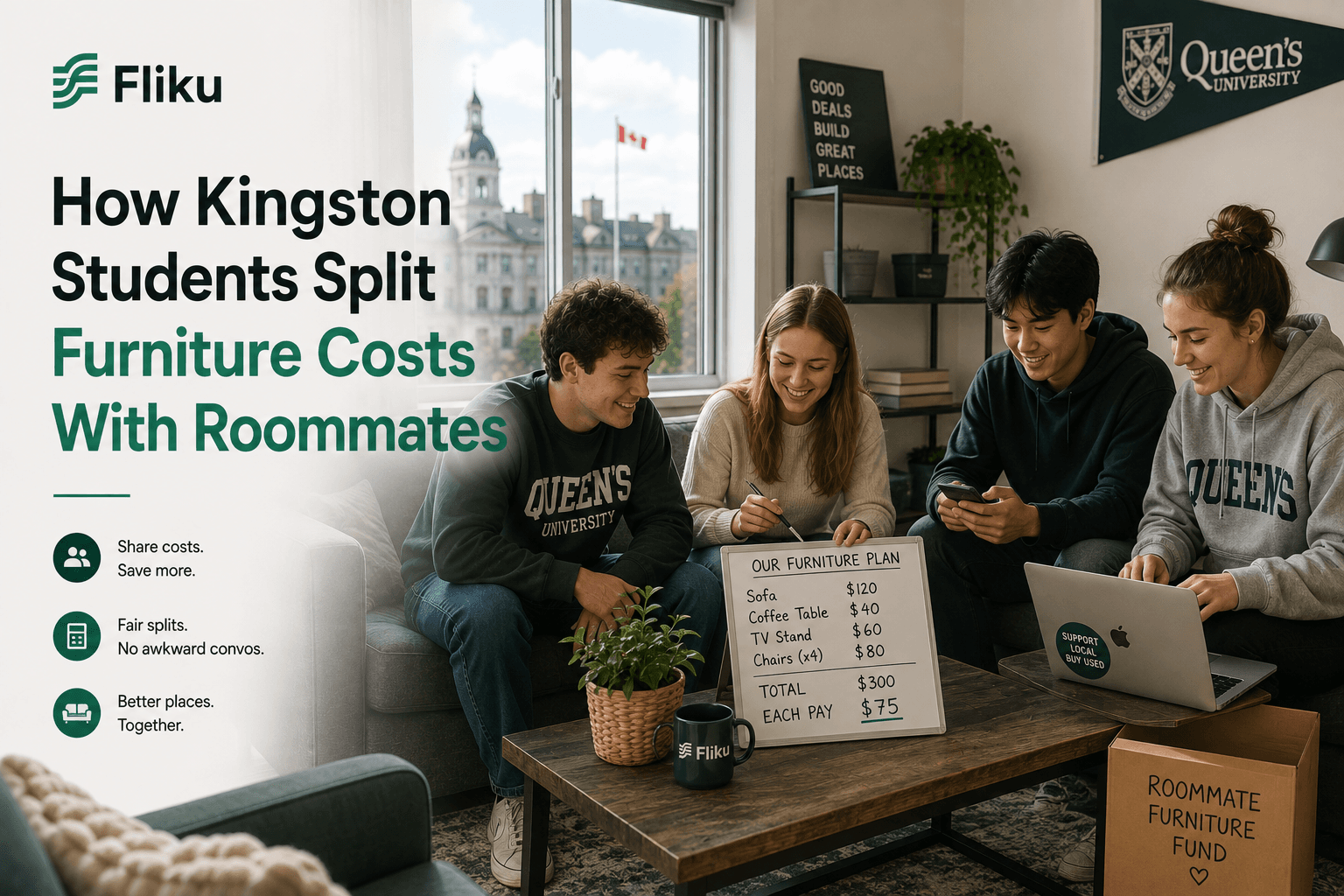
September. You and your roommate agree to split the cost of a sofa. $120 total, $60 each. Great idea. You pick it up from a student on Earl Street, carry it up two flights of stairs, and the living room finally feels like a place people actually live.
April. Your lease is ending. You're moving to a different apartment. Your roommate is staying. The sofa is staying. You ask for $60 back — or at least something. Your roommate says it's only worth $30 now so you each get $15. You've been friends since first year. The conversation is now weird and neither of you is fully wrong and both of you leave it feeling like something got taken from you.
This exact conversation happens in Kingston student apartments every April. In houses on Earl Street, on Johnson Street, on Frontenac Street. In every building near Queen's University. It is predictable, avoidable, and almost always the result of an agreement that seemed clear in September and turned out to have five different reasonable interpretations by March.
The fix is not complicated. It's just a conversation you have before you buy the sofa, not after you're trying to sell it.
Why Shared Furniture Always Goes Wrong at Move-Out
The problem is not that people are dishonest. The problem is that "splitting the cost" means different things to different people and nobody clarifies it in September because the friendship is new and nobody wants to be the person who sounds like they're already planning the breakup.
"We'll split it" can mean:
- We each own 50% and when we sell it, we split the proceeds 50/50
- Whoever leaves first takes their $60 in value — either money back or takes a different item
- It stays with whoever is staying in the apartment and the one who leaves gets nothing
- We sell it and split whatever it gets in April regardless of condition
All four interpretations are reasonable. All four lead to different April conversations. None of them are what you said in September because in September you just said "let's split it."
The Conversation to Have Before You Buy Anything Shared
Before you buy any item costing more than $30 as a shared purchase in a Kingston student apartment, settle three things explicitly:
1. Who owns it at move-out? — If one person stays and one leaves, does it go with the stayer or get sold and split? Decide before you buy.
2. If you sell it, how do you split the proceeds? — 50/50 of sale price? Or 50/50 of what's left after accounting for condition at time of sale?
3. What if you can't sell it? — If nobody buys it before April 30th, who is responsible for it? Who takes the loss?
This sounds bureaucratic for a $120 sofa. It is not. This conversation takes three minutes and saves a friendship-damaging argument six months later. Have it in September, in the first week, before you go to pick up anything from a seller on Fliku.
You do not need a written contract (though a quick shared note in your phones is not a bad idea). You need clarity on all three points before money is spent.
Three Ways to Structure Furniture Ownership in a Kingston Student Apartment
There is no universally right answer. The right structure depends on your lease situation and how certain you are about who is staying next year.
Option 1: One Person Owns Everything They Brought
The cleanest structure. Person A brings their sofa and desk. Person B brings their kitchen table and coffee maker. Nobody co-owns anything. At move-out, everyone takes what they brought and sells what they don't want. Zero conflict. The downside: it requires both people to have stuff to bring, which most first-year students don't.
Option 2: Shared Purchase, Agreed Buyout
You buy the sofa together for $120. If one person leaves before the lease ends, the stayer pays the leaver $50 as a buyout — slightly below half because the item has depreciated. The stayer now owns it outright. This is the most common fair resolution in Kingston student apartments and it works well when agreed in advance.
Option 3: Shared Purchase, Sell and Split
You buy together and commit to selling together at the end of the lease, splitting whatever it gets. This works if you are both leaving at the same time. It creates conflict if one person leaves first and the sale happens months later without them.
How Furniture Loses Value in a Kingston Student Apartment
Understanding depreciation helps set realistic expectations for what shared furniture is worth at the end of the year.
In Kingston's secondhand market, used student furniture depreciates roughly as follows over one academic year:
| Item | September Purchase Price | April Resale Value | Value Retained |
|---|---|---|---|
| Sofa (clean condition) | $120 | $70–90 | ~65% |
| IKEA desk | $35 | $25–35 | ~80% |
| Kitchen table | $50 | $30–45 | ~70% |
| Coffee maker | $25 | $10–15 | ~50% |
| Bookshelf | $20 | $10–15 | ~60% |
Furniture in a clean Kingston student apartment retains 60-80% of its value over a full academic year. This is the number to use for buyout conversations. A $120 sofa bought in September is worth $75-90 in April — not $120, but not worthless either.
How to Sell Shared Furniture Fairly When One Person Leaves
If you did not agree in advance and now you are in April figuring out what is fair, here is a reasonable framework that most Kingston students find acceptable:
Establish what the item would sell for today on Fliku in Kingston. Browse the current listings for identical or similar items in similar condition. This is your baseline — the actual market value, not the original purchase price.
If the stayer is keeping it: they pay the leaver half the current market value. Not half of what you paid — half of what it's worth now. A $120 sofa worth $80 today means the stayer pays the leaver $40.
If you're both leaving and selling it: list on Fliku immediately (by April 14th, not April 28th), sell at the market price, split the proceeds 50/50 regardless of condition. Done.
If it doesn't sell before move-out: you each take a $0 loss on your half. Neither of you can blame the other for this if you both agreed to try to sell. If only one person made the effort to list and the other didn't, that's a different conversation — which is exactly why you agree to the selling plan in advance.
Why Buying Used Makes Shared Furniture Fights Nearly Irrelevant
Here is the underappreciated argument for buying used shared furniture in Kingston: when the stakes are low, the conflict is low.
A sofa bought new for $400 creates a real financial dispute in April. A sofa bought used for $80 on Fliku creates a $20-40 disagreement that most reasonable people shrug off. The math of buying used in Kingston's secondhand market makes roommate furniture disputes almost irrelevant — because there is not enough money at stake to fight about.
This is one of the least-discussed but most real advantages of buying secondhand as a Kingston student. Queen's University Student Affairs has resources on managing shared living situations — useful for more than just furniture.
Frequently Asked Questions
How should Kingston student roommates handle shared furniture at move-out?
If one roommate stays and one leaves, the fairest resolution is a buyout at current market value — the stayer pays the leaver half of what the item would sell for today on Kingston's secondhand market, not half of the original purchase price. If both are leaving, list everything on Fliku by April 14th, sell at market price, split the proceeds. The key is agreeing on this structure in September, before you buy anything shared, not in April when the lease is ending and emotions are involved.
What happens to shared furniture when one Queen's student leaves Kingston?
Whatever you both agreed to in September — which is why that conversation needs to happen before any shared purchase. In the absence of a prior agreement, the fairest approach is: check what the item would sell for on Fliku today (the actual current market value in Kingston), and the stayer pays the leaver half of that. This is more fair than splitting the original purchase price, because the item has depreciated over the academic year and its current value is the real number both parties can independently verify.
Should student roommates in Kingston buy furniture together?
Only with a clear agreement about what happens at the end of the lease. Shared furniture works well when both roommates know in September whether they're both leaving or one is staying, and when the end-of-lease plan is explicit: buyout at current value, or sell together and split. If either of those things is unclear, it's cleaner for each person to buy their own items — one brings the sofa, one brings the kitchen table — and each person takes responsibility for their own stuff at move-out.
How much does shared furniture depreciate in a Kingston student apartment?
In Kingston's secondhand market, well-maintained used furniture typically retains 60-80% of its value after one academic year. A sofa bought for $120 in September is worth $75-90 in April. A desk bought for $35 is worth $25-35. These are real market values you can verify by browsing current Fliku listings in Kingston for similar items in similar condition — not estimates or guesses. Use the current market value, not the original purchase price, as the basis for any buyout or split at move-out.
What is the easiest way to sell shared furniture before move-out in Kingston?
List everything on Fliku by April 14th — not the final week, when every other student in Kingston is selling simultaneously and prices collapse. Both roommates agree in advance to list by this date, set prices based on current market value, and split whatever it sells for. A sofa listed on April 14th sells in Kingston within 48 hours at a fair price. The same sofa listed on April 28th sells for 30-40% less because buyers have hundreds of identical listings to choose from and know it.
Shared furniture is easy when the stakes are low and the agreement is clear. Buy used in Kingston — the prices are low enough that a dispute is rarely worth having — and have the three-minute conversation about end-of-lease plans before you buy anything shared. Browse used furniture on Fliku in Kingston and keep the numbers manageable from the start. Or list what you're selling and let Kingston's buyers come to you.