Quick Answer
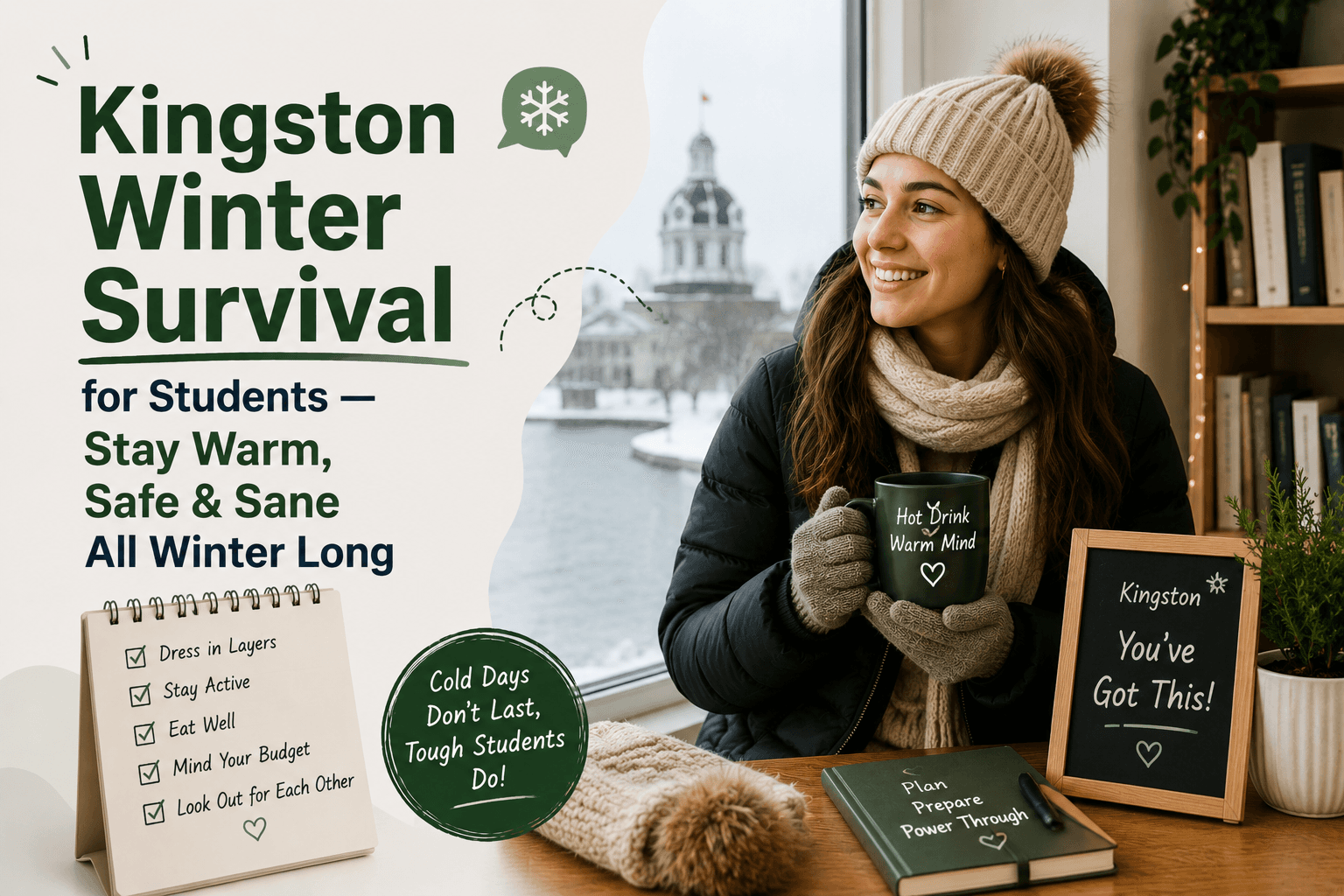
Kingston winters are colder and windier than most students expect. What to buy, what to wear, and how to get through January without misery.
September in Kingston is beautiful. Warm, sunny, the city is full of energy, and the walk to class along University Avenue feels like something out of a university brochure. Then November arrives. Then January. And if you've never lived through a Kingston winter — if you came from Toronto, Vancouver, or anywhere south of the 44th parallel thinking you knew what cold meant — you are about to learn something specific about Lake Ontario geography that no amount of packing lists prepared you for.
Kingston sits at the northeastern end of Lake Ontario in a position that channels wind off the lake directly into the city. That wind chill effect is what catches students off guard. It's not that Kingston is the coldest place in Ontario — Timmins, Thunder Bay, Ottawa all run colder on the thermometer. What makes Kingston winters brutal is the wind. A -12°C day with a 30 km/h Lake Ontario wind feels like -25°C on exposed skin, and a 15-minute walk to class becomes an exercise in survival if you're wearing the wrong gear. The thing nobody tells you: your Toronto puffy jacket is not a winter coat in Kingston. It's a fall jacket in Kingston.
What Kingston Winter Actually Looks Like — Month by Month
Understanding the arc of the season helps you prepare for it instead of reacting to it:
November: First hard frosts, first serious cold snaps. Average lows hit -5 to -8°C. This is when you realize that jacket you thought was fine actually isn't, and the lineup at Value Village for actual winter coats is already forming.
December: Temperatures dropping to -10 to -15°C regularly. First significant snowfalls. The Lake Ontario effect means Kingston can get dumped with 20-30cm overnight when a low-pressure system drags cold air over the relatively warm lake. You'll wake up to a city that looks completely transformed.
January-February: The hard months. Average temperatures of -8 to -14°C with wind chills regularly reaching -20 to -30°C. This is the stretch that wears people down — not just the cold, but the grey, the compressed daylight (it's dark by 5pm), and the relentlessness of it. If you're going to struggle in Kingston winter, this is when it happens.
March: Technically still winter. March in Kingston is when you've been cold for four months and the psychological weight of the season is at its heaviest. There are days above 0°C that feel like a miracle, and days of -15°C that feel like a personal insult.
April: Real thaw begins. Snow melts. The city comes back to life. Students who survived January-February feel a genuine, earned relief.
The Gear You Actually Need — Specific and Non-Negotiable
There is no version of this where you "make it work" with inadequate gear. Either you have the right equipment and winter is manageable, or you spend four months being genuinely uncomfortable on every outdoor movement. This is not a place for optimism about your cold tolerance.
A Real Winter Coat (Rated to -20°C Minimum)
The temperature rating on the tag matters. Not a "warm" jacket — a coat with a specific temperature certification. What qualifies:
- Canada Goose, Moose Knuckles: Industry standard, genuinely warm, expensive new ($500-800). They appear on Fliku and Facebook Marketplace in Kingston every September for $150-300 as students who bought them for a previous winter sell before leaving. This is the best time to buy.
- Arc'teryx, Helly Hansen, Columbia Omni-Heat: Performance-grade alternatives in the $150-300 new range. Lighter than the goose-down options, more technical.
- Walmart's Weatherproof brand: ~$120 new, rated to -25°C. Not glamorous; genuinely warm. If budget is the constraint, this is the practical answer.
The thing nobody tells you about winter coats: fit matters as much as rating. A coat that gaps at the wrists, neck, or waist is letting in cold air at exactly the points where heat escapes fastest. Try it on before buying and check those seal points.
Boots — Waterproof, Insulated, With Grip
Kingston sidewalks in January are a combination of packed snow, ice, and the sodium-rich slush that forms when the city salts the roads. Your regular sneakers will be soaked through in 5 minutes and will have zero traction on ice. Boots you need:
- Sorel Caribou or Conquest: The classic Canadian winter boot. Rated to -40°C, waterproof, excellent grip. ~$200 new; frequently secondhand on Fliku.
- Kamik Nation or Nationplus: ~$100-130 new, rated to -32°C. Less stylish than Sorel but genuinely functional and significantly cheaper.
- Baffin Impact: ~$150, rated to -100°C (overkill for Kingston, but it means warm in actual Kingston conditions), excellent traction.
Do not buy fashion boots that happen to be "warm." Fashion boots are not waterproof and their soles are not designed for ice traction. You will slip and you will be wet.
Hat, Gloves, and Neck Coverage — The Extremity Problem
Your body prioritizes keeping your core warm over keeping your extremities warm. In serious cold, blood flow to your hands, feet, and face is reduced to protect your organs. This means your extremities get cold faster and stay cold longer than the rest of you. You need:
- A hat that covers your ears completely: A tuque that barely reaches your ears is not enough. Get something with a wider brim or earflaps for the worst days.
- Mitts rather than gloves for cold below -15°C: Mitts keep your fingers together, sharing warmth. Gloves isolate each finger, making them cold faster. Keep both — gloves for -5 to -10°C, mitts for everything colder.
- A neck gaiter or scarf: Optional on mild days, mandatory when the wind is coming off the lake. A balaclava that covers your face is overkill most days and necessary on a few specific February mornings.
Budget $50-80 for the full extremity kit from Canadian Tire, Walmart, or MEC. This is not where you economize.
Base Layers — The Piece Students Skip
Thermal base layers worn under your regular clothes add significant warmth without adding significant bulk. You can wear your normal clothes over a thermal layer and look completely normal while being 5-7°C warmer than without it. MEC and Walmart both sell adequate thermal base layers for $20-40 per piece.
The thing nobody tells you: base layers are the highest warmth-per-dollar item in your winter kit. A $30 thermal shirt under your clothes does more than a $100 mid-layer. Buy these first.
Moving Around Kingston in Winter
Walking to Campus
Most Queen's student housing is within walking distance of campus — 10 to 25 minutes depending on where you live. In January, add 30-50% to your normal walking time on heavy snow days. The sidewalks get plowed but not immediately; the first 2-3 hours after a major snowfall means navigating unshoveled paths. Budget extra time during January-February, especially for 8am or 9am classes when the overnight snow hasn't been cleared yet.
Wind is the variable most students don't account for. The direction of the Lake Ontario wind changes how cold the walk feels dramatically. Walking into a 40 km/h headwind at -15°C is not the same as walking with it. Check the wind direction on weather apps and plan your route accordingly when conditions are extreme.
Cycling in Winter
Possible with the right setup; not practical for most students. Studded tires ($60-80) are required for safe cycling on Kingston ice. Without them, you will crash. With them, cycling in winter is genuinely doable but requires comfort with cold and confidence on unpredictable surfaces. Most students who bike September through October park the bike for winter and return to it in March or April. If you're committed to year-round cycling, the gear investment pays off; if you're uncertain, don't bother with the studded tires until you know you'll use them.
Kingston Transit in Winter
The bus system runs through all weather. Route 1 along Princess Street is the most reliable. Buses can run late during active heavy snowfall events — 5 to 15 minutes behind schedule. The Queen's U-Pass included in your student fees covers all Kingston Transit routes.
Keeping Your Kingston Apartment Warm
Kingston student housing quality varies enormously, and Victorian-era houses converted to student apartments are often the worst performers in winter. Signs of a poorly insulated student apartment:
- Frost visible on the inside of windows on cold mornings
- Noticeable drafts near exterior walls or around window frames
- A hydro bill that spikes dramatically in January-February
- Rooms near exterior walls that are noticeably colder than interior rooms
What you can do:
- Window insulation film: Available at Canadian Tire for $15-25 per window. Dramatically reduces drafts from old single-pane windows. Goes up with a hairdryer; comes off in spring without damage. One of the highest-return improvements you can make to a cold Kingston apartment.
- Door draft stoppers: Foam or fabric stops at the bottom of exterior doors block cold air entry at the floor level. $8-15 at Walmart.
- Heavy curtains: Insulate windows at night. Keep them open during sunny days to let solar heat in; close them at sunset to keep the heat in.
Ontario law requires landlords to maintain a minimum temperature of 20°C inside a rental unit from September 1 to June 1. If your apartment can't maintain 20°C despite the heating system running, document it with photos showing a thermometer reading, and notify your landlord in writing. If they don't respond, you have a complaint you can take to the Landlord and Tenant Board.
The Mental Health Piece — What Nobody Talks About
Kingston winters are hard on mood, not just body temperature. The combination of reduced daylight, grey skies for weeks at a stretch, and cold that limits spontaneous outdoor activity affects a significant portion of students every year. Some of this is seasonal affective disorder (SAD); some of it is the straightforward effect of being cold and housebound more than you'd like.
Practical interventions that actually work:
- Light therapy lamp: $40-80 at Walmart or Amazon. 30 minutes each morning near a 10,000 lux lamp is clinically demonstrated to reduce SAD symptoms. Worth every dollar if January is hard for you.
- Maintaining outdoor time even in cold: The urge to hibernate is real and counterproductive. Short walks outside in proper gear — even 20 minutes at lunch — maintain circadian rhythm and mood in a way that staying inside does not.
- Queen's Student Wellness Services: Available for counselling and mental health support. Demand spikes in January and February; if you know you struggle seasonally, connect with Wellness Services in November before the wait list builds.
How cold does Kingston Ontario get in winter?
January averages -8 to -14°C, with wind chills regularly reaching -20 to -30°C due to Lake Ontario geography. Snowfall totals 150-200cm across the season, with occasional lake-effect storms dropping 20-40cm overnight. February is often the coldest month; March remains cold psychologically if not always physically. April begins the real thaw.
What winter clothing do Queen's University students need in Kingston?
Non-negotiable: a coat rated to -20°C minimum, waterproof insulated boots with grip rated to -20°C or below, a hat covering your ears fully, warm mitts for the coldest days, and thermal base layers. Total cost new: $300-500. Secondhand from Fliku or Facebook Marketplace in September: $100-200 for the same quality. Base layers are the highest-value item; buy those first.
Is Kingston winter worse than Toronto?
For wind and lake-effect snow, yes. Toronto has Lake Ontario to its south but the wind patterns are different. Kingston is positioned so that northwest winds come across the full length of the lake and arrive at the city with significant force. Wind chills in Kingston regularly exceed what Toronto residents experience at equivalent temperatures. Students from Toronto consistently find Kingston winters harsher than expected.