Quick Answer
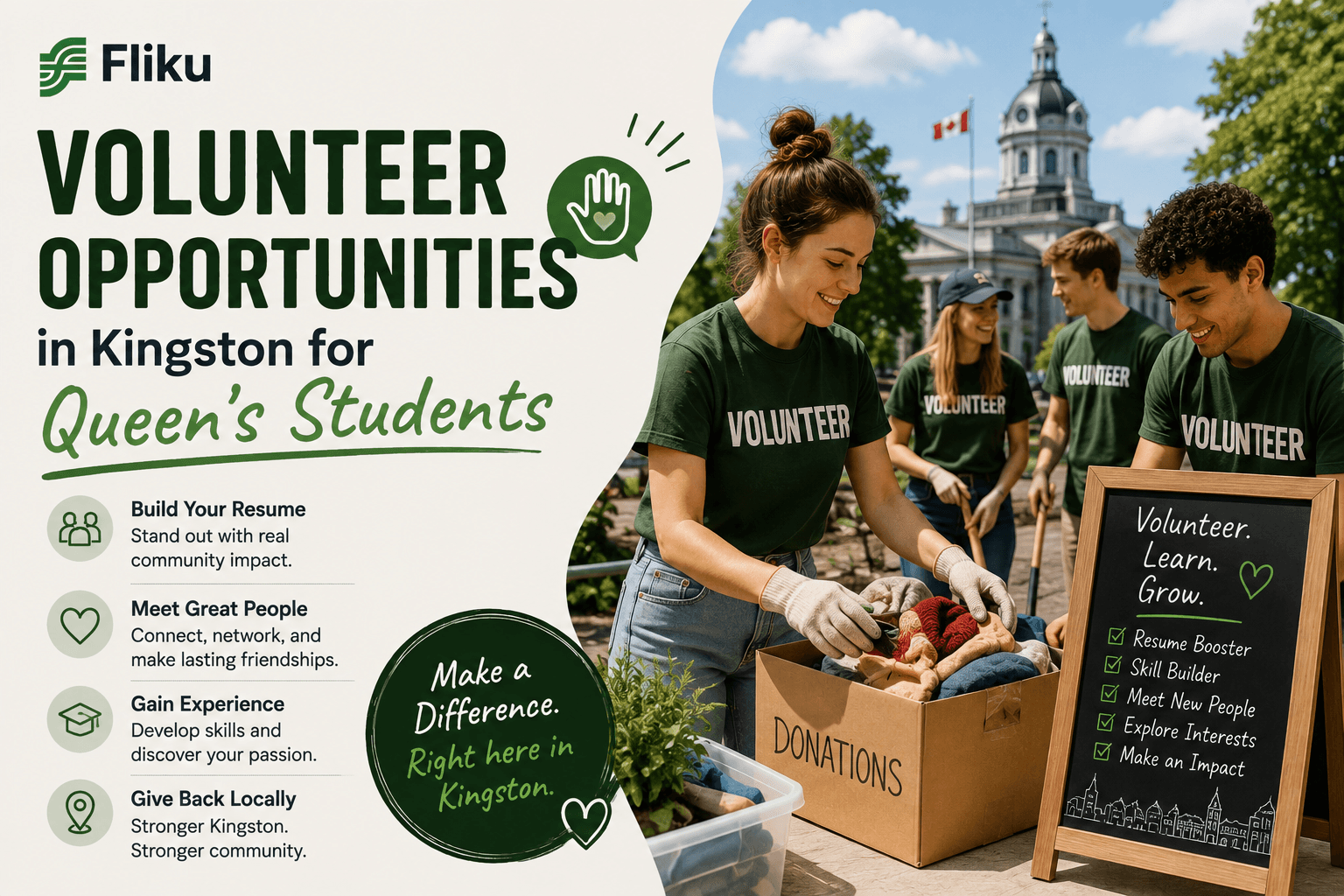
Kingston volunteering options that actually fit a student schedule, build relevant experience, and don't require a 2-year commitment.
The conversation in first-year orientation goes: "Extracurriculars matter for grad school and professional programs." Everyone nods. Then the semester starts, problem sets accumulate, and the list of volunteering intentions quietly disappears into the same place as gym membership intentions and cooking-from-scratch intentions. By third year, students applying to medicine, law, and graduate programs are writing personal statements about experiences they didn't have and community involvement they didn't actually do.
The thing nobody tells you about volunteering in Kingston: the barrier is almost always activation energy, not availability. There are more volunteer opportunities in Kingston than most students know about, many of them schedule-compatible with a full course load, and the ones that matter for professional applications are not the ones that require the most hours — they're the ones where you showed up consistently and contributed meaningfully. Two hours a week for two years is stronger than two hundred hours in one frantic semester before application season.
On-Campus Volunteer Roles — Easiest to Start
AMS Volunteer Positions
The Alma Mater Society is the largest student government in Canada and operates on a substantial volunteer workforce. Opportunities exist in every area of campus life: event coordination (Orientation Week, Homecoming events, Queen's Film Festival), services (the SHRC Student Health Resource Centre, various AMS offices), student advocacy, and the AMS itself as an organization.
Why AMS volunteering works well for students who are just starting to build extracurricular records: the time commitment is flexible and the learning is immediate. Orientation Week volunteers, for example, contribute intensive hours over two weeks in September and then their commitment is finished for the year — or they choose to stay involved in other capacities. The experience is genuinely meaningful and prominent on a Queen's student's record.
How to find AMS volunteer roles: The AMS website, the AMS clubs portal, and the AMS's social media channels announce volunteering calls. The largest single volunteering recruitment happens in August-September for the fall events cycle.
Queen's Peer Support Line
The Peer Support Line (PSL) is a confidential, non-judgmental listening service operated by trained Queen's students. Volunteers complete a training program before beginning shift work, typically 2-3 hours per shift, 1-2 times per week. The skills developed — active listening, crisis recognition, supportive communication, appropriate referral — are directly applicable to medicine, nursing, psychology, social work, and any helping profession. The PSL experience specifically demonstrates: you can handle emotional weight, you communicate effectively in difficult conversations, and you committed to a service role over time.
Apply through the AMS in the fall or winter. Spots are limited and the training investment is real — this is a commitment, not a low-bar volunteer role. Its weight on professional applications reflects that.
Queen's Peer Tutoring Programs
Upper-year students with strong academic performance in specific subjects can apply to volunteer peer tutoring programs that support first and second-year students. The structure: you're matched with students who need help in your subject, you meet weekly or bi-weekly, and you report to a faculty coordinator. This demonstrates academic mastery, communication ability, and community commitment simultaneously. For students applying to teaching programs, it's particularly relevant; for STEM programs, it signals the communication skills that graduate admissions committees specifically look for.
Community Volunteer Options in Kingston — The Full Landscape
Hospice Kingston
Hospice volunteers provide compassionate presence and practical support to terminally ill individuals and their families. The volunteer training is substantial — approximately 40 hours of preparation before you begin — and the commitment is real: you're present with people during the hardest period of their lives. This is not casual volunteering.
The thing nobody tells you about Hospice Kingston: the experience is different from any other volunteer role you can describe in a personal statement. It demonstrates that you can function in emotionally demanding situations, that you have compassion for suffering without burning out, and that you can be present for someone when there's nothing to fix. These are exactly the qualities that medicine, nursing, and social work programs most want to see demonstrated — and they're almost impossible to fake in an application. The personal statement sections of Hospice volunteers at Queen's are markedly different from sections written by students who volunteered because it would look good.
Who it's for: Students who are genuinely interested in end-of-life care, palliative medicine, or who have personal experience with loss and want to channel that into service. It's not for everyone, but for the right person it's transformative.
Kingston Frontenacs (OHL Hockey) Game Night Volunteers
The Kingston Frontenacs Ontario Hockey League team uses volunteers for game-night operations: ushering, fan services, hospitality, and event setup. The commitment is event-based and flexible — you sign up for specific games rather than committing to every game in the season. For students interested in event management, sports operations, or hospitality, the exposure is directly relevant. For students who just want an interesting volunteer experience with a professional sports environment, it's low-pressure and active.
Kingston Humane Society
Animal shelter volunteering is consistently popular with students for the obvious reason that it's genuinely pleasant in a way that some volunteer roles are not. The Kingston Humane Society uses volunteers for animal care and socialization (spending time with shelter animals to improve their socialization and adoption readiness), adoption event support, and occasional community outreach.
The scheduling advantage: you can often sign up for individual shifts rather than committing to recurring times. This makes it one of the most schedule-compatible community volunteer options in Kingston. The limitation for professional applications: it's popular and common, so it doesn't differentiate strongly. Combine it with something else if building a professional application record.
Partners in Mission Food Bank Kingston
Food bank volunteering is among the most schedule-flexible community service options. Partners in Mission and other Kingston food distribution organizations use volunteers for sorting, packing, and distribution — shifts are available throughout the week and you can often book individual shifts rather than ongoing weekly commitments. The work is straightforward, immediately impactful, and demonstrates community commitment without requiring specialized skills.
For students in social work, community health, public health, and education programs, food bank volunteering is directly relevant experience. For students in other programs, it demonstrates community engagement that personal statement readers appreciate across all fields.
CMHA Kingston (Canadian Mental Health Association)
The Kingston branch of CMHA runs programs for community members with mental health challenges and uses volunteers in several capacities: friendship programs (regular one-on-one visits with community members who benefit from social connection), event support, and program assistance. This is meaningful work with a specific population, requiring consistency and follow-through — the qualities that distinguish it from event-based volunteering on an application.
Volunteer Kingston (The Clearinghouse)
Volunteer Kingston (volunteerkingston.ca) is the city's volunteer clearinghouse — a single source listing volunteer opportunities from dozens of Kingston organizations. If none of the above matches your interests, Volunteer Kingston's database covers the full range: environment, arts, health, education, sports, emergency services, and more. Search by interest area, availability, and commitment level to find something specifically suited to what you're looking for.
Building an Application-Ready Volunteer Record
The question medical, law, and graduate school admissions readers ask about volunteer experience: Was this real engagement or resume padding? The indicators they look for:
- Duration: 6 months to several years of the same commitment reads as genuine; a series of 2-week stints in multiple organizations reads as checklist completion
- Depth: Can you describe specific people you helped, specific situations you navigated, specific skills you developed? Vague descriptions of roles ("I volunteered at X") indicate surface engagement; specific descriptions indicate real participation
- Relevance to application: For medicine and health programs, clinical or health-adjacent experience matters specifically, not just community service generally. Know what the program values and find experience that demonstrates it
- Impact: Did what you did matter? Were you relied upon? Did people benefit from your consistency?
The practical advice that professional advisors at Queen's consistently give: start one thing, do it consistently, and let it grow naturally. The student who did one thing for three years and can speak with genuine depth about what they learned is more compelling than the student who lists twelve things they did briefly for resume purposes.
How do Queen's students find volunteer opportunities in Kingston?
Volunteer Kingston (volunteerkingston.ca) aggregates opportunities from dozens of community organizations. The AMS website and clubs portal list on-campus volunteering. Specific organizations — Kingston Humane Society, Hospice Kingston, CMHA Kingston, food banks — all have volunteer inquiry processes on their websites. The most effective approach: identify what type of experience is relevant to your goals, find the organization that delivers it, and reach out directly.
What volunteer experience looks best for medical school from Queen's?
Direct patient contact or clinical exposure is what medical school admissions committees most value — Hospice Kingston, CMHA programming, hospital volunteer programs (Kingston Health Sciences Centre uses volunteers), and hospice/palliative care settings. The depth and duration of the commitment matters more than the hours. A student who volunteered at Hospice Kingston consistently for two years and can speak specifically about what they witnessed and learned is more compelling than a student who logged 400 hours across multiple one-time events.
Are there flexible volunteering options in Kingston for students with busy schedules?
Yes — the Kingston Humane Society allows individual shift sign-ups. Food bank volunteering through Partners in Mission can be booked per-shift rather than as a recurring commitment. The Kingston Frontenacs game-night volunteer program is event-based. AMS event volunteering (Orientation Week, specific campus events) is intensive but time-limited. For ongoing weekly commitments, the Peer Support Line (~2-3 hours/week) and peer tutoring programs fit within a full course load. The key is choosing roles that match your actual availability rather than committing to hours you'll later need to back out of.